
Remembering How to Be Human
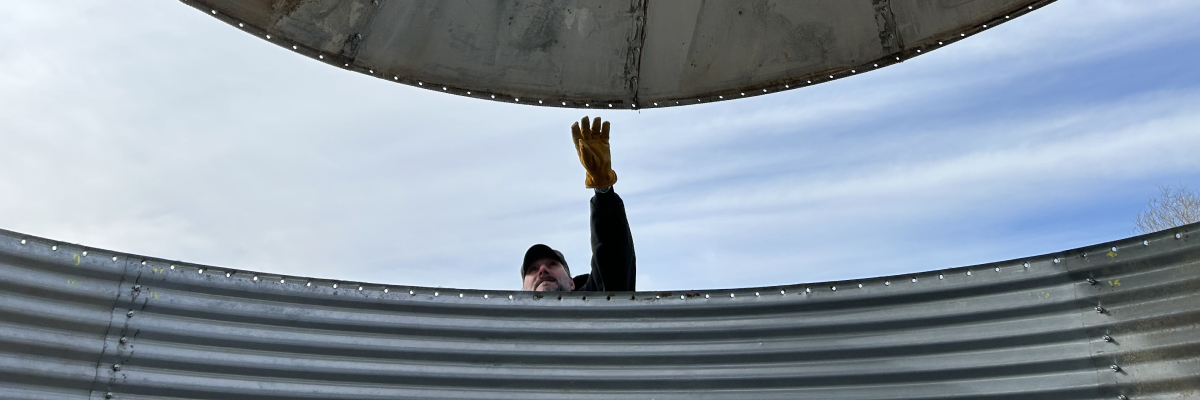
A couple of weeks ago I helped organize the first Metate Mill work party in Questa. We were assembling grain bins, getting to know each other, figuring things out together. On the surface it was simple work, but something happened that really stayed with me. Working in a group without money in the picture felt completely different once I noticed it.
People of all abilities just… worked at the pace that felt natural to them. No pressure. No subtle ego. No one trying to impress anyone or hustle for approval. No one left out because they weren’t young enough or strong enough. None of the quiet posturing that shows up when we feel like we have to earn our place. People were simply motivated to help and to build something together, and the only exchange was time credits and lunch. I’ve been part of plenty of work parties, but this was the first time I really felt what it was like to work without the pressure to perform for money.
Our group was a mix of different ages, genders, orientations, backgrounds, and levels of financial privilege all working together. And somehow, there was no hierarchy. It made me realize how much invisible pressure I’ve carried in work settings my whole life. That feeling that I have to move fast enough, be strong enough, be impressive enough. That my value is something I have to constantly prove. I hadn’t noticed how it felt to work without this invisible weight until this day.
Once I noticed how different this felt, I couldn’t help wondering how many other parts of life used to feel this natural before they were absorbed into systems that treat care and time as commodities. Like how normal it has become for children and elders to spend their days with underpaid workers instead of being held by family or community. That used to be part of being human across every culture. Somewhere along the way, this care shifted into something to buy and sell, instead of a responsibility we held together. And now even that care depends on whether a family can afford it, which many cannot.
Most of us reading this don’t need a long rundown of all the ways our systems aren’t creating community, connection, or health. We feel it every day. The real question underneath it all is: now what?
Now that we see the way we’ve been doing things isn’t creating the more beautiful world our hearts know is possible, what do we do? Why shouldn’t we be working together more often, getting to know each other, feeling a sense of belonging? How do we start creating more of what we actually want, right here, with what we have?
What would it mean to choose differently? To experiment? To try approaches we haven’t tried before, or maybe ones we’ve forgotten. What could we create if we stopped waiting for old systems to solve problems they were never designed to fix?
These are the kind of questions that led to the launch of the Taos TimeBank. Not because we have all the answers, but because we’re willing to ask these questions together and try things in community, even imperfectly, even as we learn.
My motivation for helping build this is simple. I can’t change national or global systems. They’re too big, too distant. But in a small community, we have real power. We can build bridges. We can repair what is broken. We can create belonging in a way that actually matters. Not because we’re guaranteed to succeed, but because doing nothing feels like betraying something sacred inside ourselves.
So if any of this resonates, here’s my ask. Come a little deeper into the TimeBank. Offer something that feels generous but right. Receive something that genuinely helps your life. Take your time during exchanges and get to know the person in front of you. Join us in the spring as we keep building community and exploring these questions together.
Because even now, before anything is polished or refined, the TimeBank is already a success. People have received help they couldn’t afford. New friendships have formed. New projects have been started. Real needs have been met.
We’re just getting started, and we need your ideas, your energy, and your presence to help shape what this becomes.
Let’s keep building the kind of community we wish we’d grown up in.
If you’re just learning about the TimeBank and want to know when the next opportunity to join is coming up, you can sign up for updates here.